
Paperwork Worth Keeping After the Last Panel Box Is Empty
The garage fills with empty crates faster than you expect, and the crew that packed them is already two towns away. The warranty card you need is still taped inside corner foam, one strip away from the recycling bin.
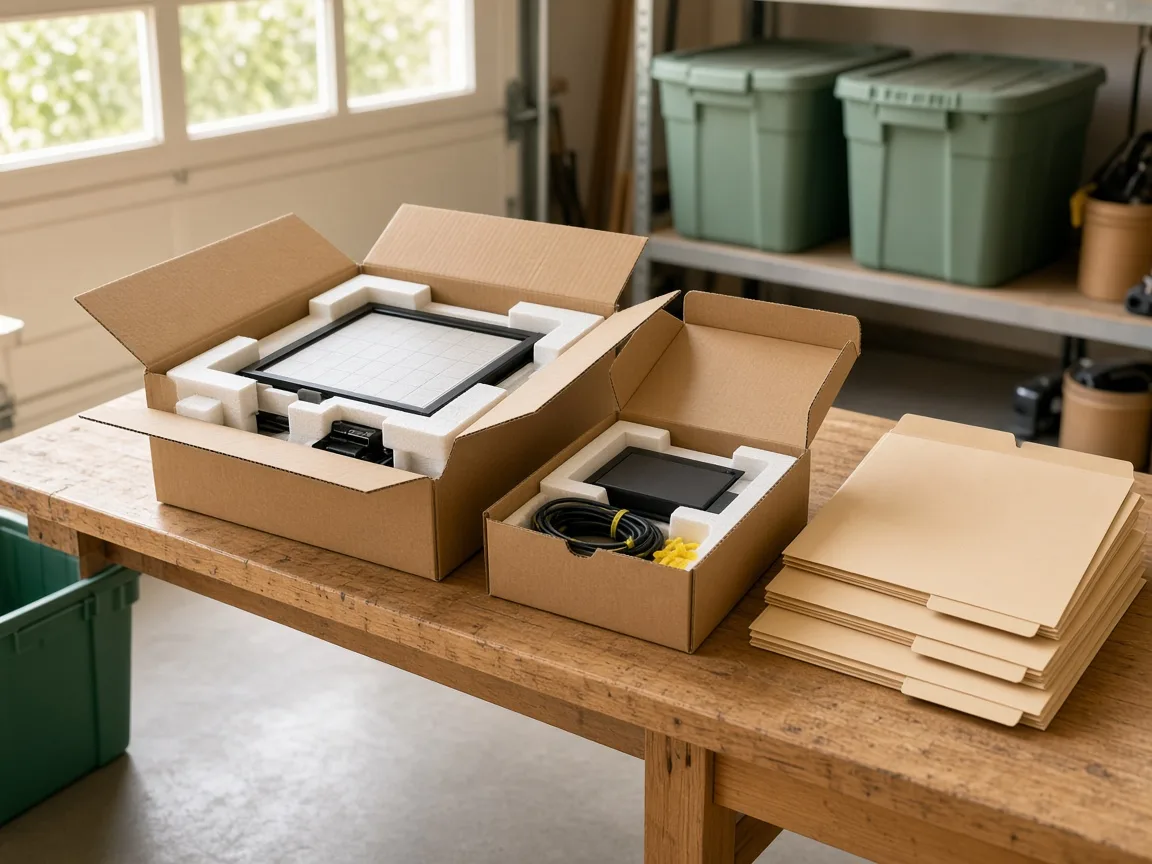
The Hour Before Boxes Leave the Driveway
Install week ends with cardboard stacked taller than your recycling cart allows. The temptation is to flatten everything at once. Slow down for one pass through each open box while you can still match a serial sticker to the module it came from.
Crews sometimes leave a paperwork envelope on the kitchen counter, but that envelope rarely holds every loose sheet that fell into packaging. The gaps show up when a utility clerk asks for a specific inverter serial months later and your email search turns up nothing.
What Hides Inside the Foam
Manufacturers tuck small items where they will not rattle in transit. Peel back corners and check under rail end caps still in shrink wrap.
- Module serial labels: Duplicate stickers meant for owner records, often smaller than the one on the frame.
- Warranty registration cards: Pre-printed forms with model fields already filled by hand.
- Quick-start leaflets: Thin booklets with shutdown steps that differ from your contract packet.
- Hardware bags: Clip envelopes with part numbers that help when a clamp needs replacement.
A box is empty when the foam is bare, not when the panels are on the roof. The difference sounds trivial until you are searching a landfill route for a barcode photo.
Documents the Installer Should Leave Separately
Some papers never belong inside equipment cartons. Ask for them before the final truck pulls away, not over email the following week.
- As-built single-line diagram showing roof layout and string grouping.
- Permit placard copy or inspection card signed by the authority having jurisdiction.
- Commissioning checklist with test results if your contract includes it.
- Manufacturer warranty transfer instructions if ownership may change before coverage ends.
If a document arrives only as a PDF later, download it the same day and print one hard copy. Portals change login rules, and accounts tied to an installer email can go quiet after the job closes.
A Folder System That Stays Findable
Fancy binders fail when nobody maintains them. Three labeled folders on a shelf outperform a color-coded system that lives in a moving box.
- Equipment: Serial photos, module list, inverter nameplate copy, optimizer count if applicable.
- Warranties: Registration confirmations, coverage start dates, contact numbers for claims.
- Permits and utility: Interconnection approval, meter swap notice, inspection sign-offs.
Slip a one-page index in front listing what is inside and where the digital backup lives. Future you will not remember whether the utility letter landed in warranties or permits.
What You Can Safely Discard
Not every sheet is worth keeping. Packing lists that duplicate what is already mounted, blank marketing inserts, and duplicate safety warnings in six languages can go. When in doubt, photograph the page and recycle the paper.
Foam inserts, cable ties, and empty rail boxes can leave once you have checked for stickers. Keep one photo of each box label if it shows batch codes that support a warranty claim.
When This Paperwork Actually Gets Used
Most folders sit quiet for a year. Then a hail event, a inverter fault light, or a property sale triggers a rush. Buyers ask for serial lists. Insurers ask for proof of professional install. Utilities ask for equipment changes you forgot you approved.
Spending twenty minutes at box breakdown costs less than reconstructing records from someone else's photos. Sort while the garage still smells like new cardboard and the crew's handwriting is fresh on the tags. That small habit turns a pile of packaging into a reference library you actually own.